Friday, October 16, 2026
$166.8 Million for Land That Isn't Empty
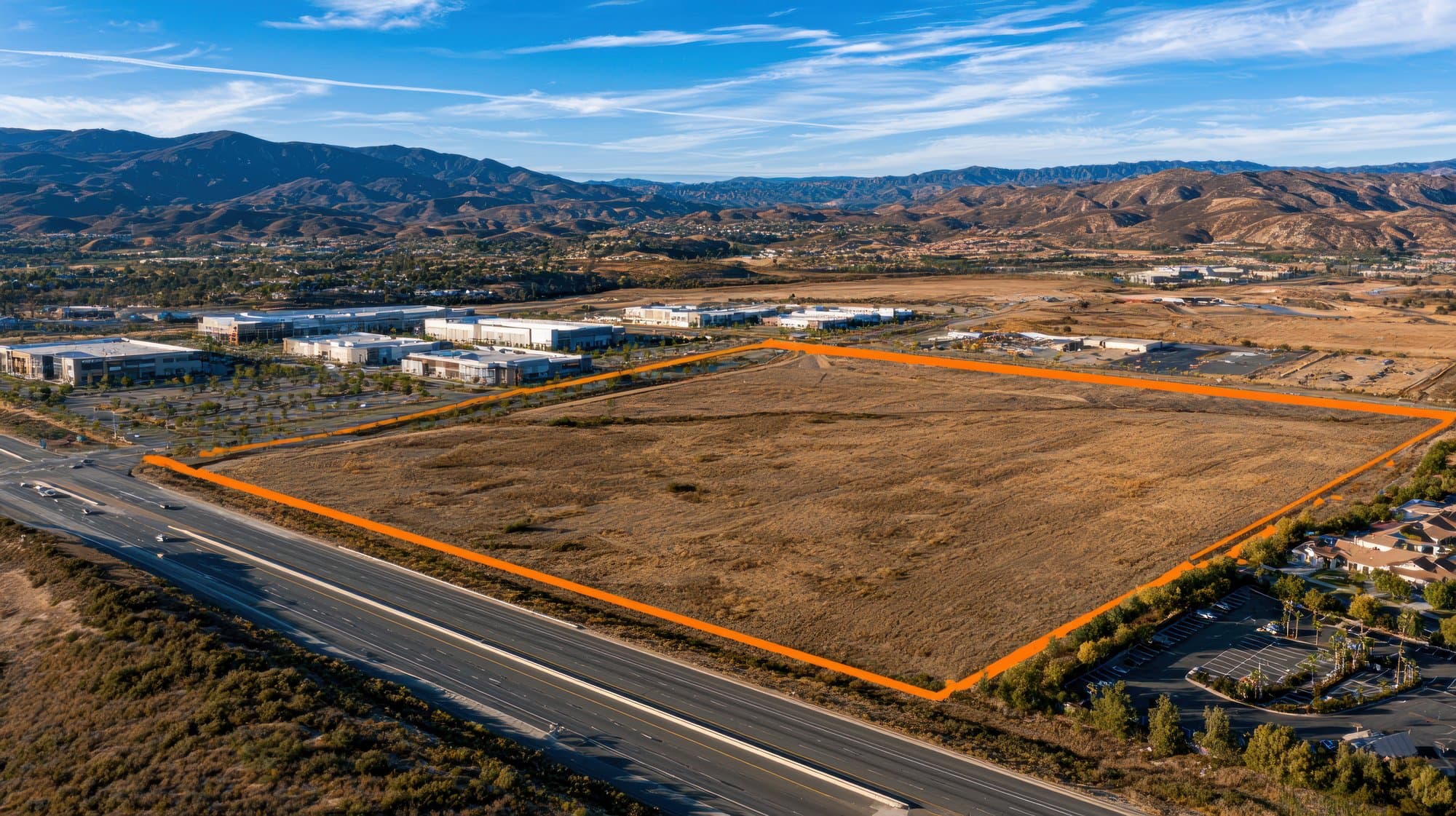
How a Virginia property transaction could transform an active public facility into two distinct real estate opportunities without eliminating its original purpose.
A 128-acre property in Northern Virginia is at the center of a $166.8 million data center land agreement, but the most interesting part of the transaction is not the purchase price. The land is already occupied by an active public safety training campus, and the proposed development would not require the entire property to be sold or its original purpose to disappear. Instead, the transaction is designed to divide the site into two distinct uses, creating a potential data center development opportunity while allowing the existing owner to modernize operations on the land it retains.
Under the approved purchase and sale agreement, approximately 41.7 acres would be sold for data center development, while roughly 86 acres would remain under public ownership. The proceeds are intended to help finance a redesigned training campus, consolidating facilities that currently occupy a larger portion of the property. The transaction remains subject to regulatory approvals and is expected to close in 2027 if the necessary conditions are satisfied.
For the data center real estate industry, this arrangement illustrates an important opportunity: valuable development sites do not always begin as vacant land or properties available for complete redevelopment. In certain circumstances, a property's existing use can be reorganized to create a marketable development parcel while preserving the function that made the property important to its owner. The resulting transaction can deliver value through both the land being sold and the improvements made possible on the land that remains.
The Transaction: $4 Million Per Acre Without Selling the Entire Property
$166.8M
Agreed purchase price
41.7
Acres to be sold
~86
Acres retained
Figures from the approved purchase and sale agreement. Closing and development approvals remain pending.
The agreement establishes a purchase price of approximately $4 million per acre for the portion designated for sale. That is a substantial consideration for land that is not currently functioning as an independent commercial development site. The property is part of an established public training facility, with existing operations that include specialized driving, firearms, and other training activities.
Rather than disposing of the entire campus, the owner plans to retain most of the land and reorganize its facilities into a more consolidated layout. The proposed arrangement would release a portion of the property for private development while using the sale proceeds to support new training infrastructure. This creates an unusual relationship between the disposition of one parcel and the improvement of another, with both outcomes forming part of the same real estate strategy.
The transaction also demonstrates why the value of a property cannot always be understood through its existing physical configuration. A site may contain functional buildings, roads, specialized facilities, and operational areas while still having a layout that can be improved. When a buyer identifies a valuable development opportunity within that larger property, the resulting sale can become a mechanism for reorganizing the entire site.
The Real Estate Opportunity Was Hidden in the Layout
One of the most compelling aspects of this transaction is that the land was not necessarily surplus in the traditional sense. The larger property remains important to its owner, and its existing activities are expected to continue. The opportunity emerged from the possibility of arranging those activities more efficiently, allowing part of the site to be separated without eliminating the property's underlying function.
This distinction matters because many property owners evaluate disposition opportunities primarily by asking whether they have land they no longer need. A different approach is to examine whether the existing use requires the current amount of land in its present configuration. Buildings, circulation routes, storage areas, and operational facilities may have been established over decades, often reflecting historical requirements rather than an optimized modern layout.
For data center developers, this can introduce a category of potential acquisition opportunities that conventional vacant-land searches may overlook. Large institutional campuses, specialized commercial properties, and other extensive landholdings may contain areas that could become separately developable through careful planning. The feasibility of such arrangements depends on zoning, access, utilities, operational continuity, and the owner's willingness to consider a comprehensive site reconfiguration.
The important point is not that every occupied property contains excess land. It is that existing occupancy does not automatically eliminate the possibility of a partial sale. Where the physical and operational conditions support it, reconfiguration can create a development opportunity that would not be apparent from the property's current use alone.
Why the Land the Seller Keeps Matters Just as Much
In a conventional property sale, attention usually concentrates on the asset being transferred and the price paid by the buyer. This transaction requires a broader perspective because the retained land is central to the seller's rationale. The proceeds are intended to help fund new facilities and infrastructure that support the property's continuing public function.
The planned improvements include replacement and consolidation of specialized training operations, with a new academy also planned as part of the broader campus. Rather than relocating the entire operation to an unrelated site, the owner intends to retain a substantial portion of its existing property and create a more modern, coordinated facility. The proposed land sale would therefore contribute to a long-term capital improvement strategy rather than simply generating revenue from a disposal.
This is an important consideration for owners of large operational properties. The financial value of a partial disposition may be measured not only by the purchase price but also by what that capital makes possible on the remaining land. If a sale helps finance facilities that would otherwise require separate funding, the transaction can have an operational significance beyond the acreage transferred.
For real estate professionals, the broader lesson is that the seller's objectives can shape the structure and feasibility of an acquisition. Understanding what an owner needs to preserve, improve, or consolidate may reveal opportunities that a straightforward offer to purchase the entire property would never address.
An Unsolicited Offer Became a Broader Property Strategy
The transaction originated with an unsolicited approach from a prospective buyer interested in acquiring part of the property. Rather than treating that proposal as the only available indication of value, the public owner sought competing offers and obtained an independent appraisal. The accepted purchase price exceeded the appraised fair market value, providing additional support for the financial terms of the agreement.
This detail is particularly relevant because it illustrates how a specialized buyer can identify development potential within a property that is not actively marketed as a conventional data center site. The buyer's interest created an opportunity for the owner to reassess the property's configuration and consider whether a partial disposition could serve its long-term objectives. The transaction subsequently evolved into a broader plan involving both private development and improvements to the retained public facilities.
For owners of large institutional or commercial properties, unsolicited interest can provide a reason to revisit existing land-use assumptions. However, a compelling offer is only the beginning of the analysis. Determining whether a transaction makes sense requires evaluating the property being sold, the operations being retained, the costs of reconfiguration, and the financial benefits available after those obligations are considered.
A High Land Price Reflects More Than Vacant Acreage
At approximately $4 million per acre, the proposed purchase price immediately attracts attention. Yet interpreting that figure requires understanding the property's location and the development opportunity being pursued. The site lies within an established Northern Virginia industrial corridor near an international airport, office parks, and existing data center facilities.
This surrounding environment provides important context for the transaction. A prospective data center developer is not simply purchasing acreage; it is pursuing a location within a mature regional market for digital infrastructure. Existing industrial land-use patterns and proximity to an established data center ecosystem can influence a buyer's assessment of development potential, although the specific project must still satisfy applicable requirements.
The transaction also demonstrates why headline prices per acre should not be treated as universal benchmarks. The agreed price reflects the circumstances of this particular property, its market, and the proposed use. It does not establish that similarly sized parcels elsewhere would command comparable values, especially where infrastructure availability, development permissions, or market demand differ.
For real estate professionals, the more useful question is what made this portion of an occupied property sufficiently attractive to support a nine-figure agreement. The answer involves a combination of location, potential development use, and a transaction structure that allows the original owner to retain a functioning property.
The Sale Could Produce Two Financial Outcomes
The most immediate financial benefit would be the $166.8 million purchase price, payable upon closing. The proceeds are intended to support modernization and consolidation of the retained training facilities, reducing the need to fund those improvements entirely through other resources. The planned academy is separately funded as part of the broader capital improvement program, making it important to distinguish the land-sale proceeds from the total cost of the new campus.
There is also a potential longer-term fiscal benefit. Local projections indicate that the completed data center development could generate more than $20 million in tax revenue during its first year after development. This remains an estimate dependent on the project's eventual completion and characteristics, rather than revenue that has already been realized.
These two outcomes illustrate why public-sector property transactions can involve considerations beyond the immediate sales proceeds. A sale may generate capital for infrastructure improvements while also converting part of a publicly owned property into a taxable private development. When the retained property continues serving its original function, the arrangement can potentially combine public facility modernization with new commercial activity.
The same underlying principle can apply to other categories of property ownership, although the financial mechanisms will differ. A private owner might use partial-sale proceeds to modernize a manufacturing facility, improve an operating campus, or reinvest in its core business. The relevant measure is the overall value created by the transaction, including the effect on the property and operations that remain.
The Development Timeline Is Part of the Transaction
Although the purchase and sale agreement has been approved, the transaction has not yet closed, and approval of the agreement does not constitute approval of the proposed data center. Both the development parcel and the retained public facilities must proceed through their respective regulatory processes. The agreement includes a contingency period during which the parties can pursue the necessary approvals, with closing anticipated in spring 2027 if the conditions are satisfied.
The planned modernization of the retained facilities extends beyond the anticipated closing date. Design and permitting activities are scheduled to continue into 2028, with construction of the replacement facilities currently expected to extend into 2031. Existing training operations are expected to use temporary arrangements where necessary during the transition, while portions of the original property may remain in service until replacement construction begins.
This timeline highlights an important distinction between identifying a development opportunity and completing the physical transformation of a property. A partial sale involving active operations requires coordination between the buyer's development plans and the seller's continued use of the retained land. Property boundaries, access, construction sequencing, and transitional occupancy can all become important elements of execution.
For data center real estate professionals, the lesson is that these transactions should be evaluated as coordinated property plans rather than isolated land transfers. The purchase price may establish the commercial terms, but successful execution also depends on the ability to create a viable development parcel while maintaining the functionality of the retained property.
What This Means for Owners of Large Properties
The broader opportunity illustrated by this transaction extends beyond public-sector land. Large institutional properties, corporate campuses, specialized facilities, and industrial estates may contain configurations that no longer represent the most efficient use of their land. In some cases, a partial disposition could create capital for improvements while allowing the owner to maintain its primary operations.
That possibility does not mean that every large property should be subdivided or marketed for data center development. The feasibility of a partial sale depends on physical characteristics, zoning, infrastructure access, operational requirements, and the economics of reorganizing the site. A property that appears to contain developable acreage may still have access limitations, easements, setbacks, or other constraints that make a separate development impractical.
The opportunity is therefore best understood as a more comprehensive approach to property evaluation. Instead of considering only the existing buildings or the total acreage, owners can examine whether the current layout is essential to the property's operations. If a more efficient configuration is possible, the resulting development parcel may attract a different category of buyer without requiring the owner to exit the property entirely.
For buyers, this approach can expand the range of potential acquisition targets. Properties that appear unavailable because they are occupied may still present opportunities when a transaction can accommodate the seller's long-term needs. Understanding those needs can become as important as identifying the land itself.
A Different Way to Think About Data Center Acquisitions
Much of the discussion around data center real estate focuses on finding available land, acquiring existing buildings, or converting properties from one use to another. This transaction introduces another possibility: creating a development site within an active property through a coordinated reconfiguration of its existing operations.
The distinction is meaningful because the property's original function remains part of the outcome. The buyer is pursuing a defined development parcel, while the seller retains most of the property and intends to improve the facilities necessary for its continued use. Rather than treating the original operation as something that must be displaced, the transaction is structured around preserving it.
This can change the conversation between prospective buyers and property owners. An owner who has no interest in selling an entire campus may still be willing to consider a proposal that finances modernization and maintains operational continuity. Likewise, a developer may find opportunities in properties that would not appear on a conventional list of available development sites.
The most important consideration is whether the transaction creates a workable outcome for both sides. The financial terms must justify the disposition, the retained property must remain functional, and the development parcel must be capable of supporting its intended use. When those conditions align, an occupied property can become the foundation for a transaction that serves two very different real estate objectives.
The Value of a Property Can Change Without Its Purpose Disappearing
A New Perspective on Unlocking Development Value
The proposed $166.8 million transaction in Northern Virginia demonstrates how a major data center development opportunity can emerge from land that is already actively used. By separating approximately 41.7 acres from a larger 128-acre property, the agreement creates a potential private development site while allowing the original owner to retain most of the land and pursue substantial facility improvements. The transaction remains conditional, but its structure offers a compelling example of how real estate value can be identified through reconfiguration rather than complete replacement.
For property owners, the significance lies in recognizing that existing operations and new development opportunities are not always mutually exclusive. A property's layout, land allocation, and long-term capital requirements can create circumstances in which a partial sale makes more sense than a complete disposition. For developers, this expands the discussion beyond vacant sites to include occupied properties where a coordinated transaction may be feasible.
As data center development continues to influence commercial real estate, the ability to recognize these opportunities may become increasingly valuable. The most attractive acquisition targets will not always be the properties that appear immediately available. Sometimes, the opportunity begins with understanding how an existing property could function differently while continuing to serve the purpose for which it was originally developed.