Friday, September 11, 2026
$264 Million for Land Before the Data Center Is Even Approved
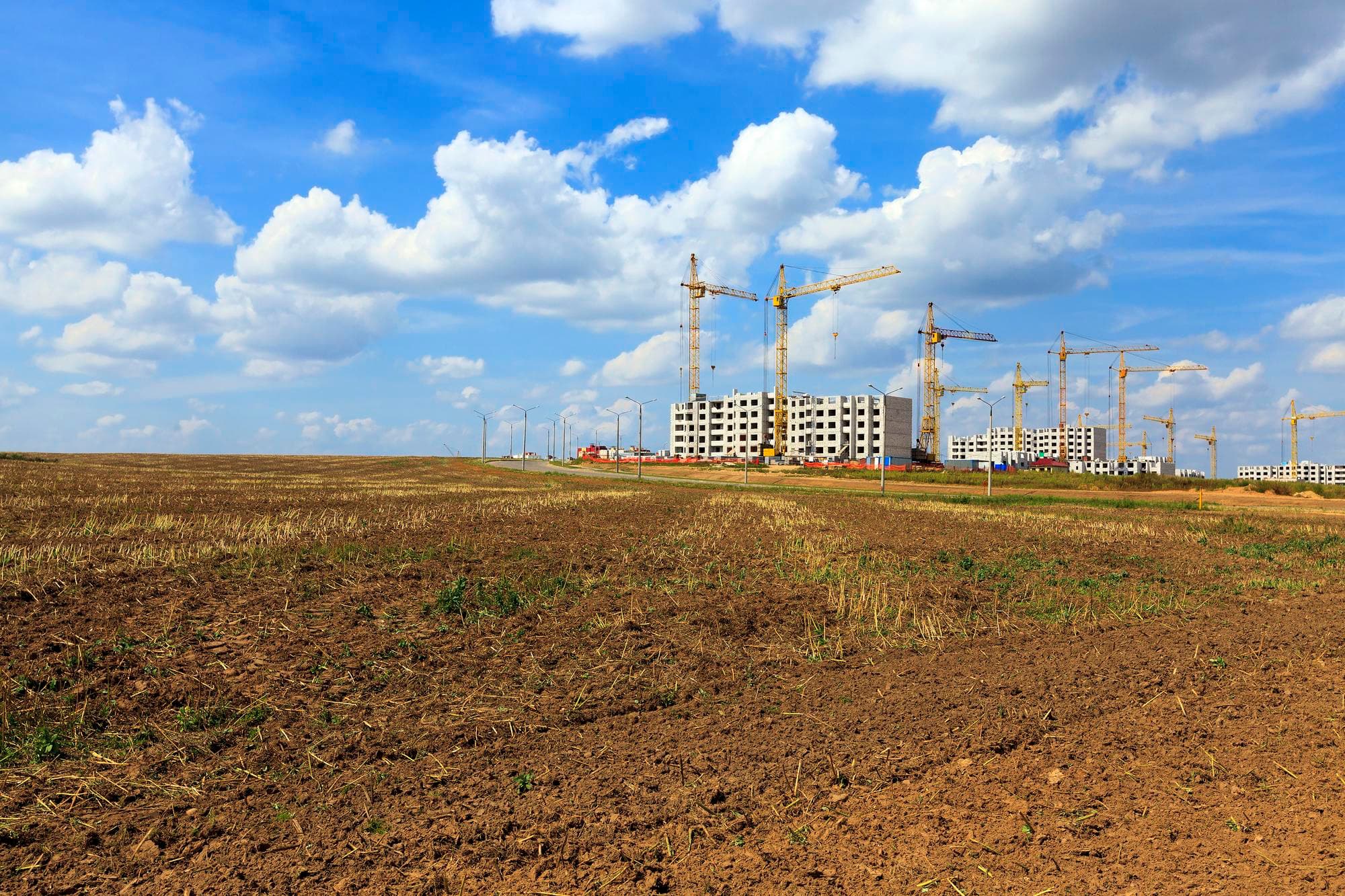
A Nearly 1,000-Acre Transaction in Washington Shows How Early Data Center Developers Are Willing to Commit to Strategic Real Estate
A nearly 1,000-acre land transaction in West Richland, Washington, is providing a striking example of how far ahead of construction major data center real estate decisions can occur. Seven parcels totaling just over 995 acres at the Lewis & Clark Ranch sold in July for approximately $263.7 million, according to county property records. Local officials have connected the acquisition to a developer active in data center projects, while the site had previously been under consideration for potential data center development.
The scale of the transaction is notable on its own. At approximately $264,000 per acre on a simple transaction-price basis, the acquisition represents a substantial commitment to land in a market that has not historically carried the same data center profile as Northern Virginia, Dallas or Phoenix. Yet the more revealing detail came when the transaction became public: West Richland officials said the city had not received a formal data center development application for the property.
That distinction makes the transaction particularly relevant to data center real estate. A developer can commit significant capital to controlling a property while major portions of the development process remain ahead. Land acquisition does not mean a data center has been approved, and site control does not mean development certainty has been achieved.
Instead, transactions like this demonstrate a defining feature of large-scale data center development: sometimes the real estate must be secured before every question about the future project can be answered.
Site Control Can Come Before Development Certainty
In conventional commercial development, investors often try to resolve a substantial portion of the entitlement and feasibility picture before making an outsized commitment to land. Data centers can complicate that sequence because the most strategically attractive properties are scarce and competition for large, well-positioned sites can move faster than the development process itself.
A buyer considering hundreds of acres may need to act before zoning, design, infrastructure planning, environmental review and community processes are fully complete. Waiting until every element is resolved can reduce risk, but it can also create another risk: losing control of the property altogether.
This creates a difficult balance. Developers need enough confidence in a site's long-term potential to justify acquisition while recognizing that ownership alone does not guarantee the right to build the project envisioned. The land transaction therefore becomes the beginning of the development process rather than its conclusion.
For investors accustomed to evaluating stabilized properties, that distinction is significant. The buyer is not acquiring predictable income. It is acquiring the opportunity to pursue a future use.
Nearly 1,000 Acres Creates a Different Development Proposition
The size of the West Richland acquisition also deserves attention. Approximately 995 acres provides room for development at a scale far beyond a single building, but the value of that acreage ultimately depends on what can legally and physically be developed.
Large sites can provide flexibility for multiple buildings, setbacks, internal roads, stormwater management, supporting infrastructure, construction staging and future phases. They can also give developers greater control over surrounding land uses and preserve optionality as a campus evolves.
However, larger acquisitions introduce their own complexity. More acreage can mean more environmental considerations, additional land-use questions, greater infrastructure requirements and increased exposure before vertical development begins. A thousand-acre position can create enormous flexibility, but it can also create a substantial amount of capital tied to land while the project moves through planning.
This is why acreage alone cannot explain the economics of a large data center transaction. The buyer is underwriting what that acreage may eventually allow, not simply what the property represents today.
The Transaction Price Is Only the Beginning
A purchase price approaching $264 million can appear to represent the largest real estate commitment in a project. For a major data center campus, however, acquisition is only one component of the eventual development cost.
After controlling the property, the developer still needs to determine exactly what can be built and under what conditions. Site planning, engineering, entitlement work, environmental diligence, infrastructure coordination, road improvements, construction and numerous other requirements can follow.
That means the economic exposure can increase substantially after closing.
This is an important distinction for landowners and investors watching headline transaction values. A large acquisition price does not necessarily indicate that the site is immediately development-ready. In some cases, it reflects the value a buyer places on securing control early enough to begin the work required to create that readiness.
The transaction should therefore be understood as a strategic position rather than a completed development.
A Development Application Changes the Risk Profile
The absence of a formal development application at the time the acquisition became public is particularly useful for understanding the difference between property ownership and development rights. West Richland officials have said that any future data center proposal would face a public review process.
That process matters because a data center can introduce land-use questions that differ substantially from the uses previously envisioned for a property. Local governments may evaluate building scale, setbacks, noise, visual impact, traffic, water use, emergency services, infrastructure requirements and compatibility with surrounding development.
Community participation can also influence the process. West Richland residents were already seeking greater information and public involvement following disclosure of the land transaction.
For a developer, these issues are not secondary considerations. They form part of the real estate risk attached to the site. A property can be physically attractive and strategically located while still requiring a significant entitlement effort before construction becomes possible.
Data Center Real Estate Is Increasingly About Controlling Future Possibilities
The West Richland transaction illustrates a broader shift in how developers think about land. They are not necessarily purchasing property because a fully approved project exists today. They may be purchasing it because the property offers a combination of scale, location and future development potential that is difficult to replicate.
That changes the meaning of site control.
Ownership creates time to study the property, advance plans and work through the development process without the risk that another buyer acquires the land in the meantime. It can also give a developer greater flexibility to redesign a project as requirements evolve.
For very large campuses, that flexibility can be especially valuable. The final development may look materially different from the concept contemplated when the land was first identified.
The real estate strategy therefore needs to accommodate uncertainty rather than assume it can be eliminated before acquisition.
The Land Had a Future Before Data Centers Entered the Picture
There is another reason the Lewis & Clark Ranch transaction is particularly interesting from a real estate perspective. The broader ranch encompasses thousands of acres and has been part of long-range planning for urban development, including residential and employment uses.
A potential data center campus introduces a very different development model.
That creates a classic highest-and-best-use question. Should large tracts near growing communities become residential neighborhoods, commercial districts, industrial properties, data centers or some combination of uses?
The answer can have implications far beyond the individual property. Large-scale land transactions can influence surrounding development patterns, infrastructure planning and future land values.
For local governments, the question is therefore not simply whether a data center can be built. It is how a major campus fits into the long-term vision for an area that may have several competing development paths.
Paying Early Can Be the Price of Optionality
A transaction of this magnitude also demonstrates how much developers may be willing to invest in optionality.
Owning a large site creates choices. A developer can pursue the full campus, phase the project over time, adjust the development footprint, preserve portions for expansion or potentially reconsider the property's use if conditions change.
Those options have value, particularly in a market where large contiguous sites can become increasingly difficult to assemble once development accelerates.
But optionality should not be confused with certainty. The buyer still carries the risk that the ultimate development is delayed, modified or unable to proceed as initially envisioned.
The price paid for land therefore reflects a judgment about both opportunity and risk.
The Real Estate Due Diligence Becomes More Important, Not Less
When a developer acquires land before the final development pathway is fully established, due diligence becomes even more important. The objective is not to prove that every future variable is known. It is to identify which uncertainties could materially affect the site's development potential.
That analysis can include land-use regulations, title, easements, environmental conditions, geotechnical characteristics, access, neighboring uses, site configuration, water and sewer availability, infrastructure corridors and the ability to phase or subdivide the property.
For a site approaching 1,000 acres, these issues can vary significantly across different portions of the property. Not every acre may have equal development value.
A sophisticated acquisition strategy therefore looks beyond the headline acreage and evaluates how much of the site can realistically contribute to the intended campus.
Community Risk Is Now Part of Site Risk
Large data center developments are also receiving greater public scrutiny across the United States. That means community response can no longer be treated as something that begins after a site has been acquired.
The West Richland transaction illustrates the point. Public questions emerged before a formal data center application had even been submitted.
For developers, early engagement can become part of protecting the real estate investment. A technically viable site can face delays if local concerns around land use, infrastructure, environmental impact or community benefits are not addressed effectively.
This is particularly important in markets without a long history of hyperscale development. Residents and officials may be encountering the scale and operating characteristics of large data centers for the first time.
Real estate risk is therefore becoming broader. It includes not only what can physically be constructed but also whether the development can secure and maintain the local support necessary to move forward.
What This Means for Data Center Real Estate
The nearly $264 million West Richland transaction is significant because it separates two concepts that are often treated as interchangeable: acquiring a data center site and having an approved data center project.
They are not the same.
A major land acquisition can happen early in a development timeline, when entitlement, design and public review remain ahead. The buyer is making a calculated decision that controlling the property now is worth assuming some of that future uncertainty.
For developers, that reinforces the importance of balancing early site control with disciplined diligence. For landowners, it demonstrates how potential data center use can introduce a new buyer and a very different valuation framework. For local governments, it shows why major land transactions can precede the formal processes through which the eventual project is evaluated.
Most importantly, it illustrates how data center development is changing the timing of real estate decisions.
Buying the Land Is the Beginning
Nearly 1,000 acres and approximately $264 million make the West Richland transaction notable. The fact that the city had not yet received a formal data center application when the deal became public makes it more revealing.
Large-scale data center development increasingly requires developers to make consequential real estate decisions before every aspect of a project is settled. The right property may need to be controlled years before the first building becomes operational and before the final campus configuration is known.
That creates risk, but it also creates opportunity. Developers that wait for complete certainty may discover that another buyer has already secured the site.
The central question in data center real estate is therefore changing. It is not simply whether a property is ready to become a data center today.
It is whether the property is valuable enough to control while the developer works to make that future possible.