Saturday, January 31, 2026
From Greenfield to Grid-Ready: What Makes a Data Center Site Viable in 2026
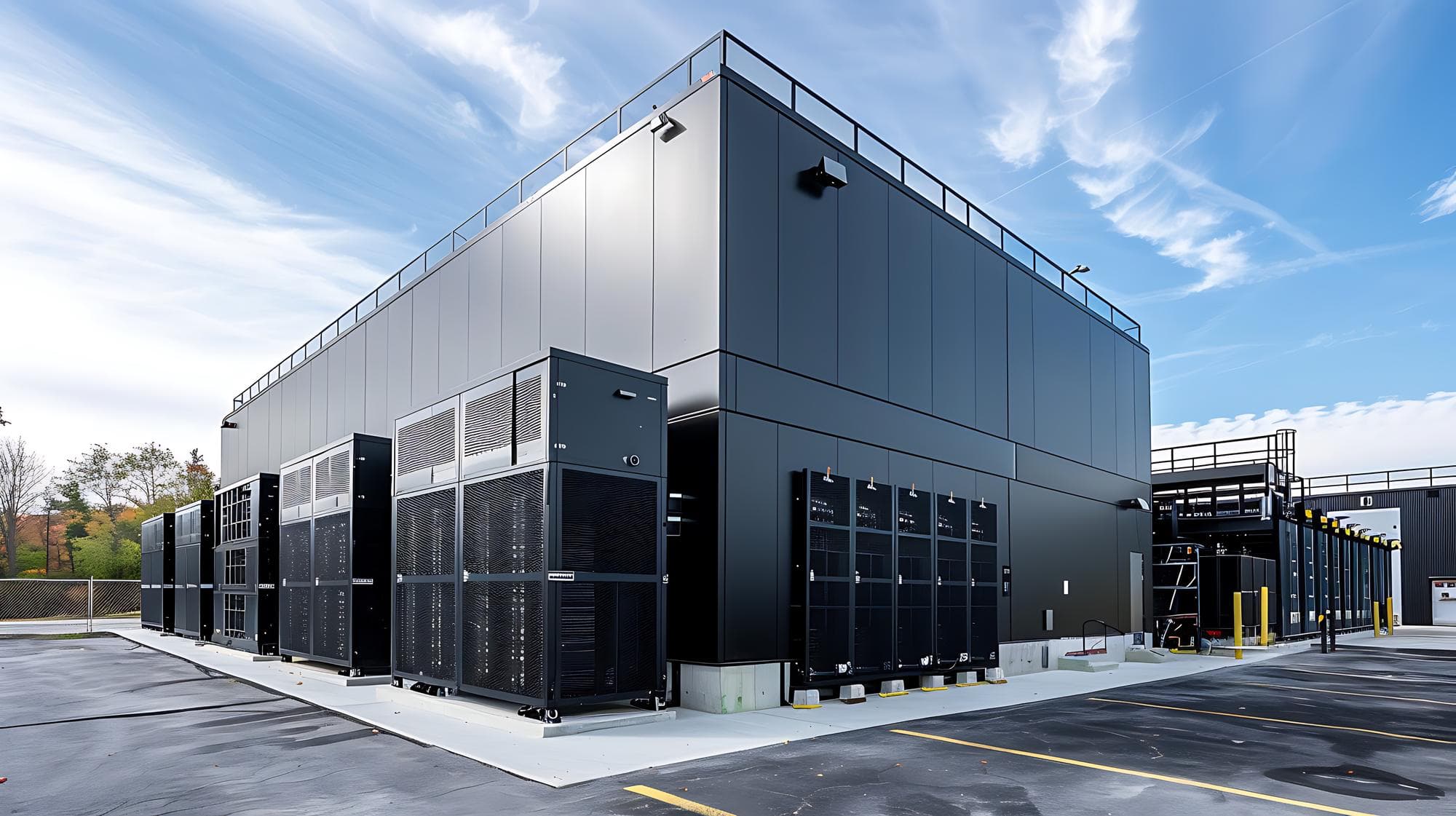
The definition of a viable data center site has fundamentally changed. In prior cycles, site viability was largely a real estate question—land availability, zoning compatibility, proximity to fiber, and a rough estimate of utility capacity. In 2026, those criteria are no longer sufficient. A greenfield parcel can appear ideal on paper yet fail entirely once power timelines, regulatory constraints, and grid realities are fully understood.
For data center real estate developers, viability is now measured less by what a site could support and more by what it can realistically deliver—on schedule, at scale, and within regulatory bounds. Grid readiness has overtaken land readiness as the gating factor in development decisions. As demand accelerates and infrastructure constraints tighten, the path from greenfield to grid-ready has become the defining challenge in modern data center development.
Understanding this shift is essential for anyone involved in site selection, land acquisition, or long-term capacity planning. The sites that will succeed in 2026 are not simply well-located. They are deeply integrated into power planning, regulatory coordination, and infrastructure execution from day one.
Greenfield Does Not Mean Ready
Greenfield sites continue to attract attention because they offer scale, flexibility, and long-term expansion potential. Large parcels allow developers to plan campuses rather than isolated buildings, design infrastructure holistically, and avoid legacy constraints common in infill locations. However, greenfield status increasingly masks hidden risks.
Many greenfield parcels lack immediate access to high-voltage transmission, substations with available capacity, or utility commitments that align with hyperscale timelines. Even when power infrastructure exists nearby, it may already be fully allocated, contractually constrained, or politically sensitive to expand. The result is a growing disconnect between land availability and power deliverability.
In 2026, a greenfield site without a clear, utility-backed path to power is not viable—regardless of acreage or price. Developers are learning that early enthusiasm around raw land must be tempered by detailed grid analysis. Without it, projects stall before construction even begins.
Grid Readiness Has Become the First Filter
Grid readiness now sits at the top of the site viability checklist. This goes beyond simple megawatt availability. Developers must evaluate how power will be delivered, when it can be delivered, and under what conditions.
Utilities are no longer passive participants. They are active gatekeepers. Interconnection queues are growing longer. Load studies are more conservative. Infrastructure upgrades require extended lead times and regulatory approvals. In some regions, utilities are prioritizing projects based on perceived economic benefit or grid stability, not first-come-first-served requests.
A site is considered grid-ready only when utility alignment exists across multiple dimensions: transmission access, substation capacity, construction sequencing, and regulatory clearance. Without this alignment, even well-capitalized projects face multi-year delays.
As a result, site viability assessments increasingly begin with utility engagement rather than land negotiations. Developers are front-loading grid conversations, sometimes years before land acquisition closes, to avoid stranded assets.
Power Timelines Are Rewriting Development Models
One of the most disruptive changes in 2026 is the divergence between real estate timelines and power timelines. Historically, these schedules moved in parallel. Today, power delivery often lags land development by several years.
Substation construction, transmission upgrades, and generation interconnections require long planning horizons. Environmental reviews, public hearings, and regulatory approvals extend timelines further. In power-constrained markets, utilities may delay commitments altogether until broader grid reinforcement plans are finalized.
This reality is reshaping development strategies. Speculative builds are becoming riskier. Phased development is stretching further into the future. Capital is being deployed earlier to secure power rights rather than vertical construction.
Site viability is now judged by whether a project’s power timeline aligns with tenant demand windows. A site that can deliver land and permits in twelve months but power in sixty months is effectively non-viable for most hyperscale and AI-driven workloads.
Entitlement Risk Is Increasing, Not Decreasing
While power dominates the viability conversation, entitlements remain a critical variable—and a growing source of uncertainty. Municipalities are under increasing pressure to regulate data center growth more tightly. Concerns around power consumption, water usage, noise, and land use intensity are driving more restrictive zoning and longer approval processes.
Greenfield sites often face the highest entitlement risk because they trigger broader land use questions. Rezoning agricultural or undeveloped land for large-scale data center use invites scrutiny from planning commissions, environmental groups, and local residents. Even supportive jurisdictions may impose conditions that alter project economics.
In 2026, a viable site is one where entitlements are not just achievable, but predictable. Developers are placing greater value on jurisdictions with clear data center frameworks, defined approval timelines, and political alignment. Ambiguity now carries a tangible cost.
Transmission Proximity Matters More Than Ever
Proximity to transmission infrastructure has become one of the strongest predictors of site viability. High-voltage transmission lines, existing substations, and generation assets anchor development potential in ways that zoning alone cannot.
Sites near transmission corridors offer optionality. They reduce the need for costly line extensions, minimize right-of-way disputes, and accelerate interconnection timelines. In contrast, remote greenfield sites—even those with abundant land—face mounting challenges in securing transmission access.
This shift is changing land valuation dynamics. Parcels once overlooked due to distance from population centers are now prized if they sit near robust transmission infrastructure. Conversely, land in traditional data center markets can lose appeal if grid capacity is exhausted.
In 2026, site selection increasingly resembles energy infrastructure planning. Developers must think like utilities, not just real estate investors.
Water Access Is a Secondary but Rising Constraint
While power dominates viability discussions, water access remains a critical supporting factor. Cooling requirements, particularly for high-density and AI workloads, place sustained demands on local water systems. Greenfield sites without municipal water access or reuse options face added complexity.
Permitting new wells, securing water rights, or negotiating reclaimed water agreements can introduce delays and political resistance. In water-stressed regions, these issues are becoming more prominent in site evaluations.
A viable site in 2026 is one where water strategy is resolved early. Developers are increasingly integrating cooling and water planning into initial site assessments rather than treating them as downstream engineering problems.
Network Density Still Matters—But It No Longer Leads
Fiber availability and network density remain important, but they no longer define site viability on their own. In many markets, network providers are willing to extend infrastructure if power and scale justify the investment. Network follows power, not the other way around.
This represents a reversal from earlier development cycles. Previously, proximity to fiber routes could elevate a site’s appeal. Today, fiber is assumed to be solvable if other constraints are addressed. Sites with strong grid positioning but limited network presence are now considered viable, while network-rich sites with power constraints are not.
Viability Is Now Measured in Certainty, Not Potential
The most important change in 2026 is philosophical. Site viability is no longer about theoretical capacity. It is about execution certainty.
Developers, investors, and tenants are prioritizing sites where timelines, costs, and risks are clearly understood—even if headline capacity is lower. A smaller site with firm power commitments and predictable approvals can outperform a massive greenfield parcel burdened by uncertainty.
This shift favors disciplined development over speculative land banking. It rewards early coordination with utilities and regulators. And it elevates grid readiness as the defining feature of modern data center real estate.
From Land Play to Infrastructure Strategy
The journey from greenfield to grid-ready reflects the broader evolution of the data center industry. What was once a land-driven business has become an infrastructure strategy exercise. Real estate fundamentals still matter, but they are now subordinate to power, policy, and execution.
In 2026, viable data center sites are those embedded within energy systems, regulatory frameworks, and long-term planning cycles. They are not discovered—they are engineered.