Saturday, February 14, 2026
How Colocation Is Quietly Becoming Core to AI Data Pipelines
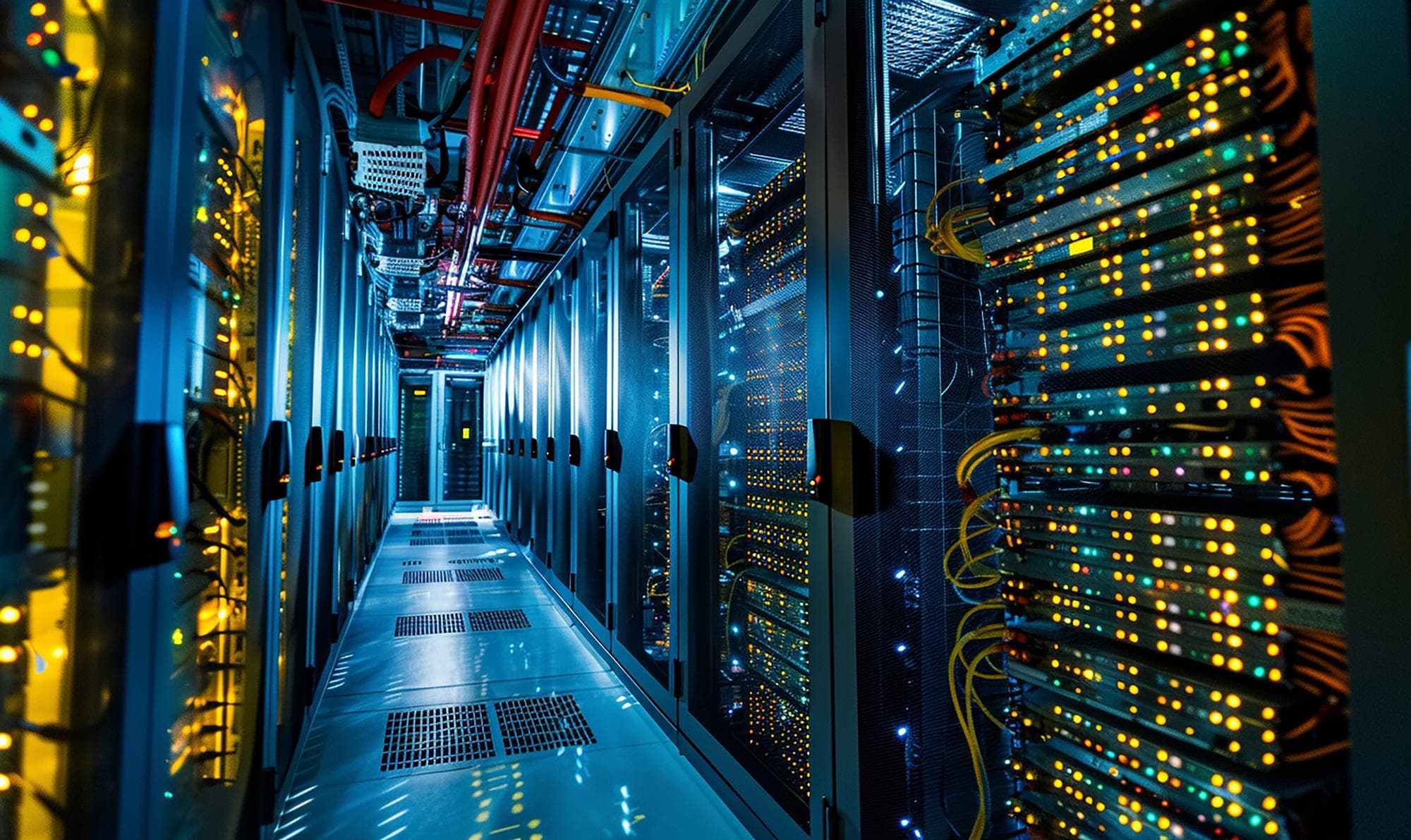
Colocation has long been positioned as a flexible alternative to owned data centers or public cloud infrastructure. It offered shared facilities, scalable footprints, and access to dense network ecosystems. For years, its role was largely transactional—space, power, and connectivity delivered as a service.
That role is changing.
As AI workloads scale, colocation is becoming embedded directly into AI data pipelines. Not as a fallback option, and not as overflow capacity, but as a structural component of how data is ingested, processed, moved, and served. This shift is happening quietly, without the fanfare that accompanies cloud platform announcements, yet its implications for data center real estate are significant.
Colocation is no longer just where infrastructure lives. It is increasingly where AI workflows are anchored.
AI Pipelines Are Becoming Physically Distributed
AI pipelines are not monolithic. Training, fine-tuning, inference, data preprocessing, and storage often occur in different locations, driven by cost, latency, and infrastructure availability. As these pipelines become more complex, physical distribution becomes unavoidable.
Colocation facilities provide the connective tissue that allows this distribution to function. They sit between cloud regions, enterprise environments, and edge locations, enabling data movement without forcing everything into a single platform or geography.
This positioning makes colocation an architectural necessity rather than a convenience. AI pipelines increasingly depend on neutral, well-connected infrastructure that can bridge disparate environments efficiently.
Power Constraints Are Pushing AI Workloads Into Colo
Power scarcity in core cloud regions is accelerating this trend. As hyperscalers face constraints on where they can deploy new capacity, AI workloads are being placed wherever power can be delivered reliably. Colocation providers with secured power are natural beneficiaries.
Rather than waiting for hyperscale capacity to come online, organizations are deploying AI workloads into colocation environments that already have infrastructure in place. These deployments are not temporary. Once data pipelines are established, they tend to persist.
For data center real estate, this means colocation facilities are absorbing workloads that might previously have gone directly into owned or hyperscale environments.
Colocation Enables Modular AI Architectures
AI infrastructure is increasingly modular. Organizations mix owned hardware, cloud services, and third-party platforms to optimize performance and cost. Colocation supports this modularity by offering neutral ground where components can interconnect without vendor lock-in.
This is particularly important for AI inference and data aggregation. Colocation facilities allow models trained in one environment to be deployed close to data sources or end users without duplicating entire stacks.
As AI architectures become more fragmented, the value of colocation as a unifying physical layer increases.
Network Density Is Critical to AI Data Movement
AI pipelines generate massive data flows. Moving training data, model outputs, and inference results efficiently requires dense, resilient network connectivity. Colocation facilities excel in this area.
Carrier-neutral environments reduce dependency on any single network provider. Direct interconnections minimize latency and cost. These characteristics are essential for AI workloads that rely on rapid data exchange between systems.
From a real estate perspective, network density enhances asset relevance. Facilities positioned at key network crossroads become disproportionately valuable as AI data traffic grows.
Specialized Infrastructure Favors Shared Environments
AI workloads often require specialized infrastructure—high-density power, advanced cooling, and custom hardware layouts. Building this infrastructure independently in every location is inefficient.
Colocation allows specialization to be shared. Providers can invest in advanced cooling systems, robust power distribution, and secure facilities that support multiple tenants. This amortizes cost and accelerates deployment.
As AI hardware evolves rapidly, this shared model reduces risk for tenants, who can adapt without committing to long-term owned infrastructure.
Colo Is Becoming a Permanent Layer, Not a Bridge
Historically, colocation was often treated as a bridge—used during transitions between owned data centers and cloud environments. In AI pipelines, it is becoming permanent.
Once data gravity forms around a colocation site—driven by network interconnections, data stores, and inference deployments—moving away becomes difficult. The facility becomes embedded in the operational fabric of the AI system.
This permanence has implications for leasing, investment horizons, and campus planning. Colocation assets are no longer transient solutions; they are long-term infrastructure anchors.
Implications for Data Center Real Estate Strategy
For DCRE stakeholders, the quiet centrality of colocation in AI pipelines changes how assets should be positioned and evaluated. Facilities that can support high-density power, advanced cooling, and rich interconnection ecosystems will capture disproportionate value.
Markets with strong colocation ecosystems may see sustained demand even as hyperscale development shifts elsewhere. Conversely, assets that cannot support AI-driven requirements may see declining relevance.
Colocation’s role is expanding not because it replaces other models, but because it connects them.
The Hidden Backbone of AI Infrastructure
The rise of AI has shifted attention toward compute, models, and platforms. Less visible—but equally important—is the physical infrastructure that allows these systems to function together. Colocation is emerging as that hidden backbone.
Not loudly. Not dramatically. But structurally.
As AI data pipelines continue to evolve, colocation will increasingly define where data flows, where models run, and where real estate value concentrates. Those who recognize this shift early will be better positioned to build, invest, and operate the next generation of data center infrastructure.