Friday, June 5, 2026
Inside the Site Selection Process for a Modern Data Center Campus
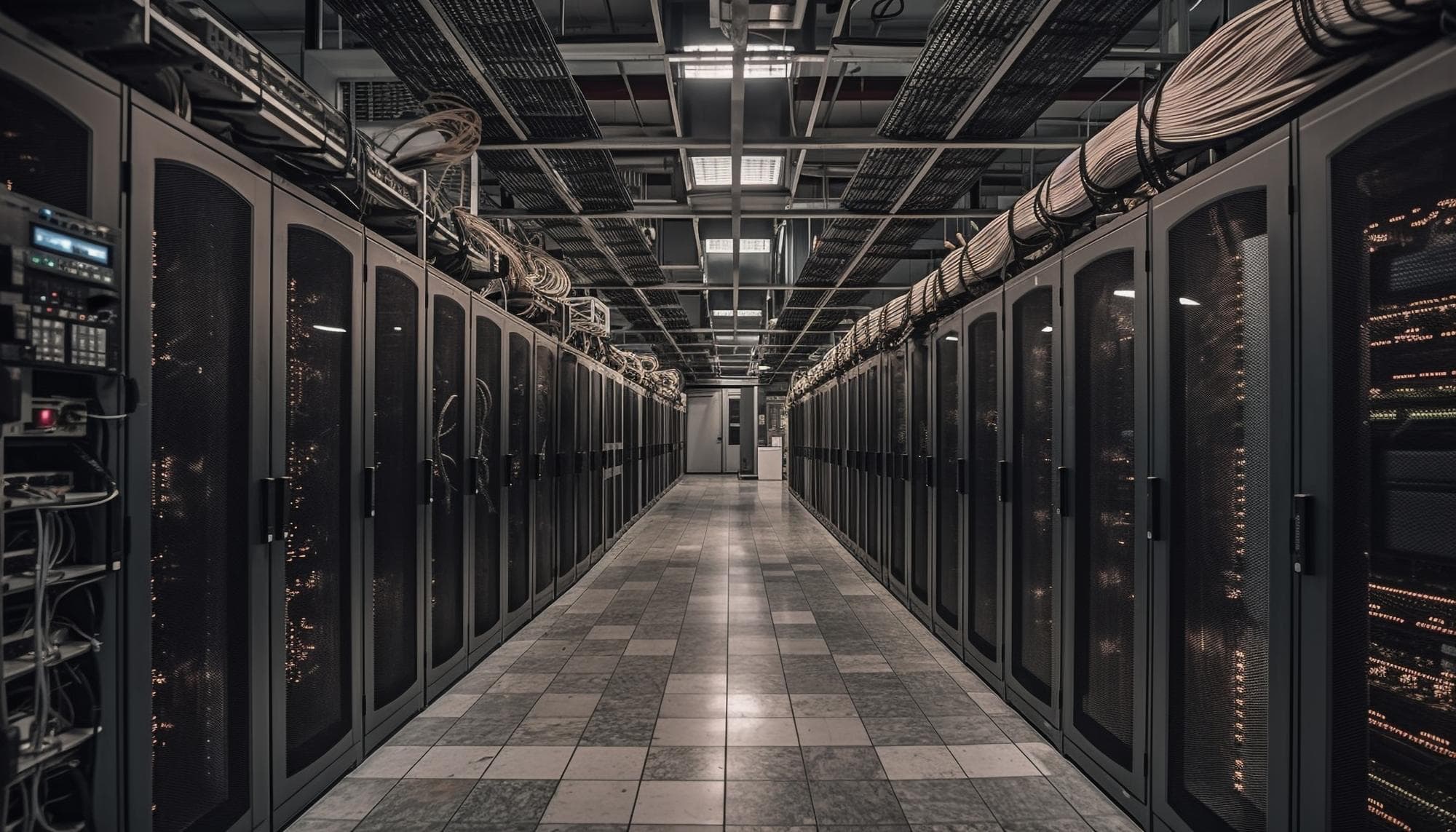
How Developers Evaluate Land in the AI Infrastructure Era
Data center site selection has become one of the most complex decisions in commercial real estate.
A decade ago, developers could often begin with a relatively familiar checklist: land availability, fiber access, utility service, tax environment, and proximity to demand. Those factors still matter, but they are no longer enough.
Today, modern data center campuses are being designed for AI infrastructure, hyperscale cloud growth, and long-term digital capacity expansion. That means site selection is no longer just about finding land that can support one facility.
It is about identifying land that can support an infrastructure ecosystem.
A viable site must now align across power, transmission, interconnection, environmental constraints, zoning, fiber, water, construction access, and future expansion potential. If even one of those variables fails, the entire development case can weaken.
The best data center sites are no longer simply available.
They are buildable, scalable, power-aligned, and resilient.
The First Question Is No Longer “Where Is the Land?”
In traditional real estate, the site search often begins with geography.
In data center development, the first question is increasingly different:
Can this location support the required infrastructure?
Land alone has limited value if it cannot be energized, entitled, connected, cooled, secured, and expanded. That is why developers now evaluate sites through an infrastructure-first lens.
A modern campus site must support both immediate deployment and long-term growth. Developers are not only asking whether a site can handle the first phase of development. They are asking whether it can support the second, third, and fourth phase over the next decade.
This changes how land is valued.
The most attractive site is not always the cheapest or largest parcel. It is the site with the strongest path to deliverable capacity.
Power Availability Comes First
Power is now the defining factor in data center site selection.
Before developers commit to a site, they must understand whether the local utility system can support the project’s required load.
That includes:
- existing available capacity
- future utility expansion plans
- energization timelines
- substation proximity
- transmission constraints
- long-term scalability
For a modern data center campus, the difference between theoretical power and deliverable power is critical.
A site may appear to have access to electricity on paper, but if transmission upgrades, substation construction, or utility approvals require several years, the project timeline may no longer align with customer demand.
That is why developers increasingly begin utility conversations early — often before land is acquired.
Power feasibility is no longer a later-stage diligence item.
It is the foundation of site selection.
Transmission Access Is Becoming a Core Real Estate Variable
As campuses grow larger, transmission infrastructure is becoming increasingly important.
Modern hyperscale and AI campuses can require power loads that far exceed traditional commercial development. This places greater importance on proximity to high-voltage transmission corridors and expandable grid infrastructure.
Developers evaluate whether a site is positioned near:
- existing transmission lines
- planned transmission upgrades
- substations with expansion potential
- utility growth corridors
- reliable grid infrastructure
This has changed the geography of data center development.
Some sites located farther from traditional business centers may become highly attractive because they sit closer to scalable electrical infrastructure.
In the AI era, proximity to the grid can matter as much as proximity to users.
Interconnection Risk Can Make or Break the Project
Interconnection is one of the most important and misunderstood parts of data center development.
It refers to the process of connecting the facility to the electrical grid in a way that can support its required load reliably and safely.
For large campuses, interconnection may involve:
- utility studies
- transmission analysis
- substation planning
- infrastructure upgrades
- transformer procurement
- energization approvals
This process can take years.
Developers must evaluate not only whether interconnection is possible, but how long it will take, what upgrades are required, who pays for them, and whether the timeline supports the project’s business case.
A strong site with weak interconnection visibility can quickly become a high-risk development opportunity.
Zoning and Entitlements Determine Buildability
A site may have power and land, but if it cannot be entitled, it cannot become a data center campus.
Zoning and land-use approvals are now central to site selection because data center projects are receiving greater scrutiny from local governments and communities.
Developers must evaluate:
- current zoning designation
- permitted industrial or technology uses
- height and setback requirements
- noise restrictions
- environmental review requirements
- local approval timelines
- community sentiment
Entitlement risk can create major delays.
In some markets, permitting can take longer than construction itself. That makes entitlement feasibility one of the most important early-stage development considerations.
The strongest sites are not only physically suitable.
They are politically and legally executable.
Environmental Constraints Are No Longer Secondary
Environmental due diligence has become a major part of modern site selection.
Developers now evaluate risks related to:
- flood zones
- stormwater management
- wetlands
- wildfire exposure
- water availability
- extreme heat
- protected habitats
- environmental permitting
These issues directly affect development feasibility, insurance costs, construction timelines, and long-term resilience.
A site may look ideal from a land and power perspective, but environmental constraints can add complexity, cost, or delay.
For long-duration infrastructure assets, resilience matters.
Developers are not just asking whether a site can be built today. They are asking whether it can operate reliably for decades.
Fiber and Connectivity Still Matter
Although power now dominates the conversation, fiber remains essential.
A data center campus must support high-capacity, low-latency connectivity to cloud ecosystems, carrier networks, enterprise users, and other infrastructure nodes.
Developers evaluate:
- proximity to fiber routes
- carrier availability
- network redundancy
- latency requirements
- interconnection opportunities
- route diversity
For AI training workloads, latency may be less critical than power availability. But for cloud, enterprise, and inference workloads, connectivity remains a major factor.
The strongest sites balance power scalability with network resilience.
A campus cannot be isolated from the digital ecosystem it is designed to support.
Water and Cooling Strategy Influence Site Viability
Cooling is becoming a more important part of site selection as data center densities increase.
AI workloads are pushing facilities toward higher rack densities and more advanced cooling requirements. Depending on the design, location, and technology used, water availability may become a key consideration.
Developers evaluate:
- local water availability
- drought risk
- cooling technology options
- wastewater infrastructure
- regulatory restrictions
- community concerns around water use
In water-stressed markets, cooling strategy can directly influence whether a project is politically viable and operationally sustainable.
This is one reason many developers are evaluating alternative cooling systems and lower-water-use designs earlier in the site selection process.
Land Size Matters, but Expansion Potential Matters More
Modern data center campuses are rarely planned as one-time developments.
They are planned as phased infrastructure platforms.
That means developers evaluate land not only by total acreage, but by how that acreage can support:
- multiple buildings
- substations
- cooling infrastructure
- security zones
- stormwater systems
- fiber pathways
- future expansion phases
A site must allow for growth without requiring the developer to restart the entire land acquisition and entitlement process every time demand increases.
This is why large contiguous parcels are becoming more valuable.
Future expansion optionality is now a major driver of land value.
Construction Access and Logistics Are Part of the Equation
Data center campuses are highly complex construction projects.
Developers must evaluate whether the site can support:
- heavy equipment access
- material staging
- road infrastructure
- construction workforce availability
- proximity to suppliers
- long-lead equipment delivery
This becomes especially important for large campuses where construction may occur across multiple phases for many years.
Poor logistics can increase costs, slow delivery, and create operational challenges during phased development.
In a market where speed-to-capacity matters, construction access is not a minor detail.
It is part of the development strategy.
Market Demand Still Matters
A technically viable site must also align with market demand.
Developers evaluate whether the location supports:
- hyperscale demand
- enterprise growth
- cloud availability zones
- regional connectivity needs
- tax incentives
- long-term economic expansion
Some sites may be infrastructure-ready but located in markets with limited customer demand. Others may be near strong demand but lack power or land scalability.
The best opportunities sit at the intersection of infrastructure feasibility and market relevance.
That intersection is increasingly difficult to find.
The New Site Selection Framework
Modern data center campus site selection is no longer a simple real estate exercise.
It is a layered infrastructure evaluation.
The strongest sites typically share several characteristics:
They have scalable power access.
They are positioned near transmission infrastructure.
They offer realistic interconnection timelines.
They can be entitled without excessive friction.
They have manageable environmental risk.
They provide access to fiber and network redundancy.
They support long-term campus expansion.
They can be developed efficiently and operated reliably.
That is a high bar.
And it explains why truly development-ready data center sites are becoming so valuable.
The Best Site Is the One That Can Actually Deliver Capacity
The modern data center campus is not just a real estate asset.
It is an infrastructure platform.
That changes the entire site selection process.
Developers are no longer simply looking for land. They are looking for land that can be transformed into scalable, resilient, AI-ready digital infrastructure.
That requires alignment across power, transmission, interconnection, zoning, environmental risk, fiber, cooling, logistics, and future expansion.
In today’s market, the best site is not necessarily the biggest, cheapest, or most visible.
It is the one that can actually deliver capacity.
And in data center real estate, deliverable capacity is becoming the most valuable asset of all.