Wednesday, September 23, 2026
The Data Center Market Is Giving Older Industrial Properties a Second Life
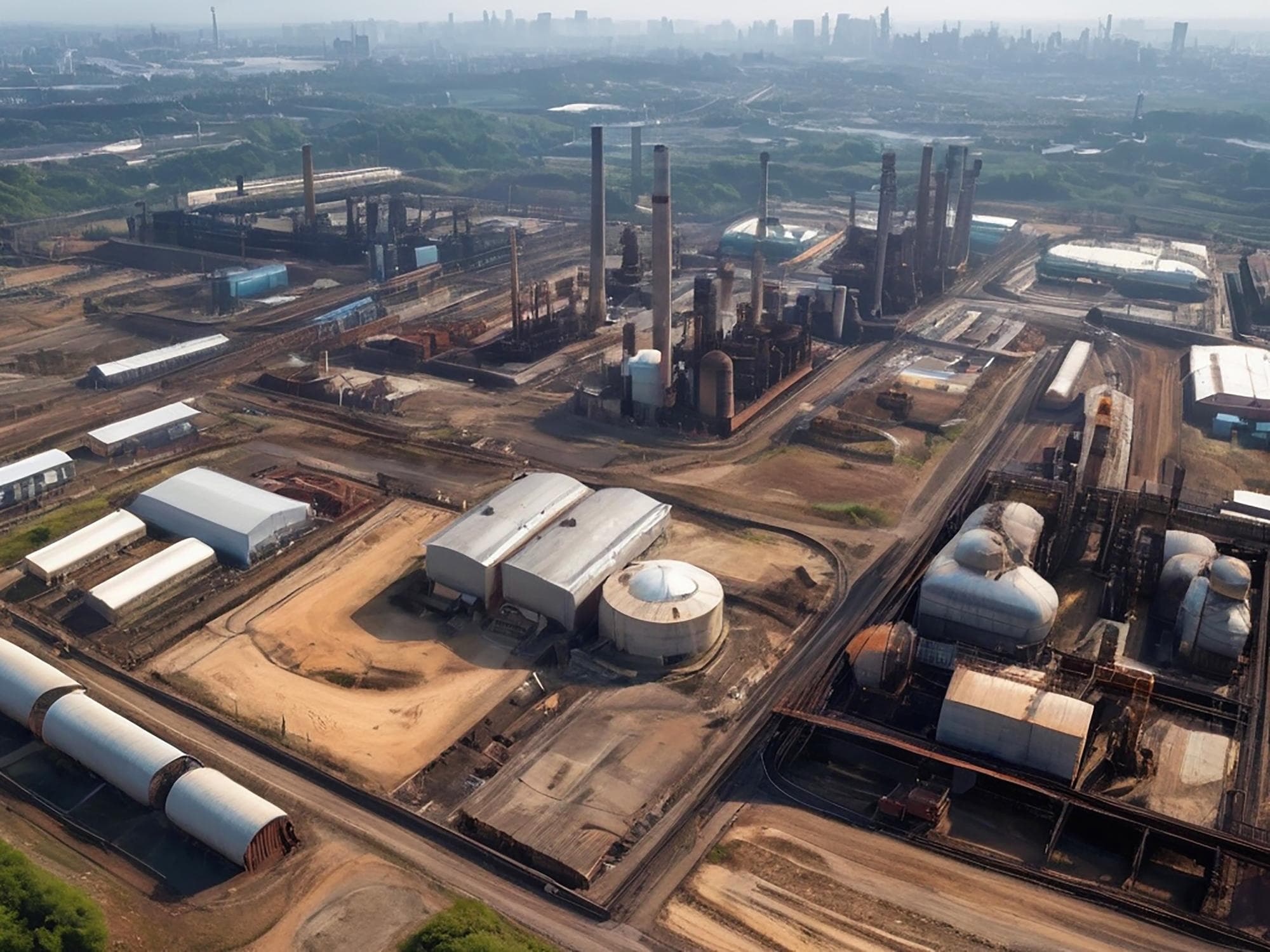
Legacy industrial sites are entering a new real estate conversation as data center demand expands
Some of the most interesting data center development opportunities are not beginning with vacant land. Increasingly, developers are looking at older manufacturing facilities, retired industrial campuses, former power-intensive properties, and other legacy sites that were built for entirely different industries. In many cases, the original use may have disappeared, but the characteristics that made the property valuable in the first place have not. Large land positions, industrial zoning, established access, existing utility corridors, and infrastructure designed for intensive operations can all remain relevant long after the original business has closed.
That legacy is becoming more important as data center development grows larger and more infrastructure-intensive. Developers are not simply searching for acreage; they are looking for properties that can support long-term expansion, specialized infrastructure, and complex development timelines. Older industrial sites can sometimes provide a head start because they were originally selected and improved for demanding uses. For owners, developers, and investors, that creates a new question around highest and best use: could a property that has reached the end of one economic life be positioned for another?
Industrial Obsolescence Does Not Always Mean Real Estate Obsolescence
Commercial real estate has traditionally treated obsolete industrial facilities as redevelopment challenges. Buildings may no longer meet modern manufacturing requirements, equipment can become outdated, and large campuses can remain underutilized for years after an operation closes. In many cases, conventional reuse options focus on warehousing, logistics, light industrial conversion, or complete redevelopment.
Data center developers may evaluate the same property differently. A decades-old manufacturing building may have limited value in its current configuration, yet the surrounding site can still offer substantial development potential. Existing road infrastructure, industrial setbacks, utility corridors, and a history of intensive use can make the property more relevant than its physical age suggests. As a result, the investment thesis may depend less on preserving the building and more on determining whether the underlying site offers a credible path to a new infrastructure use.
This distinction broadens the conventional definition of adaptive reuse. In some cases, the existing structure may be converted. In others, portions of the property may be demolished and rebuilt. The opportunity can still qualify as a form of redevelopment because the value is being created from the land, infrastructure, and development history already embedded in the property.
Former Power-Intensive Properties Deserve a Second Look
The strongest candidates often share a common history: their previous use required substantial infrastructure. Former metal-processing facilities, paper mills, semiconductor plants, manufacturing campuses, and other heavy industrial properties were rarely developed like ordinary commercial buildings. Their operations often depended on significant electrical capacity, water systems, transportation access, large development footprints, and land-use frameworks capable of supporting intensive activity.
Those characteristics can remain relevant when the original use disappears. A former industrial property may already be positioned near infrastructure that would be costly or time-consuming to recreate on undeveloped land. It may also offer a large contiguous site that is difficult to assemble in a mature market. When those factors align with modern data center requirements, the property can become strategically interesting despite its age or industrial history.
The key is understanding what the site's previous use actually left behind. A property should not be evaluated simply because it once supported a high-load operation. Developers need to determine whether the infrastructure remains usable, whether current utility conditions support the intended development, and whether the site can accommodate a new operating profile. Industrial history can create opportunity, but only when that history translates into present-day development value.
The Existing Building May Not Be the Most Important Asset
One of the more counterintuitive aspects of industrial-to-data-center redevelopment is that the existing building may not be what attracts the buyer. Traditional commercial real estate analysis often begins with the structure itself: its condition, remaining useful life, floorplate, occupancy potential, and replacement cost. A data center developer may begin with a much broader evaluation of the property.
The site plan, acreage, zoning, rights-of-way, infrastructure access, environmental conditions, and future expansion potential can carry more weight than the existing improvements. A building that has little direct value for a data center project may still sit on land that is exceptionally difficult to replicate. In that situation, the structure becomes secondary to the strategic characteristics of the site.
This is why some industrial properties can attract interest even when substantial demolition or reconstruction is required. The buyer is not necessarily acquiring a finished building. The buyer may be acquiring a development platform that already contains several of the elements required for a future campus.
Highest and Best Use Can Change as the Market Changes
Real estate value is ultimately tied to what a property can legally, physically, and economically support. For decades, an industrial site may have been valued according to manufacturing demand, logistics use, warehouse redevelopment, or conventional industrial leasing. Data center demand introduces a different potential use, one with its own site requirements, development economics, and buyer profile.
The property itself may not have changed, but the market surrounding it has. A site that was once considered too specialized or too infrastructure-heavy for conventional redevelopment can become attractive because those same characteristics now align with digital infrastructure demand. This is especially relevant in markets where large contiguous tracts and development-ready industrial land are becoming more difficult to find.
That does not mean every older industrial property should be repositioned as a data center opportunity. The highest and best use analysis still depends on zoning, infrastructure, environmental conditions, access, market demand, and development feasibility. However, the expansion of the data center sector is clearly giving some legacy properties a new investment thesis that did not exist a decade ago.
Industrial Zoning Can Reduce Part of the Development Friction
Land-use compatibility is one reason older industrial properties can be attractive. Many were already designated for manufacturing, heavy industrial, or other intensive commercial uses, which may place them in a more favorable starting position than agricultural or residential land. Depending on the jurisdiction, that can reduce some of the land-use conflicts that often accompany large-scale infrastructure development.
The advantage is not automatic. Data centers may still require special approvals, design review, environmental permitting, or amendments to existing entitlements. Local governments are also becoming more precise about how data centers are treated within zoning codes, particularly as projects grow larger and communities pay more attention to their impacts.
Even so, beginning with a property that has a long industrial history can provide a more compatible planning context. From a real estate perspective, that can reduce part of the development uncertainty and shorten portions of the entitlement process. Time spent resolving land-use questions is ultimately part of the true cost of a project, so any credible reduction in that timeline can influence site value.
Infrastructure History Can Be More Important Than Location History
The previous use of a property can reveal infrastructure characteristics that are not immediately obvious from a conventional real estate listing. A manufacturing campus may have been selected decades ago because of its electrical infrastructure, water availability, transportation access, or ability to accommodate large-scale operations. Even if the original business is gone, portions of that infrastructure may remain relevant.
This matters because data center development is increasingly pushing beyond established markets. A property does not necessarily need to sit inside a traditional data center cluster if it provides a credible combination of land, access, connectivity, and infrastructure. In that sense, a site's historical function can become part of the due diligence process.
The important question is no longer simply what the property was used for. It is what the previous use tells developers about the infrastructure that may still exist today. That shift in perspective can reveal opportunities that conventional industrial underwriting may overlook.
Existing Infrastructure Creates a Head Start, Not a Guarantee
The presence of legacy infrastructure should not be confused with development readiness. A former industrial facility may have substantial electrical equipment, water systems, or transportation access and still be unsuitable for a modern data center. Existing equipment may need to be replaced, prior utility capacity may no longer be available, and infrastructure installed for one industrial process may not align with the requirements of another.
For that reason, developers must verify every major site attribute rather than assume that historical use translates directly into present-day capability. Fiber may be limited, utility agreements may have expired, water systems may be undersized, and existing structures may conflict with the preferred campus layout. Environmental conditions may also create cost or schedule implications that are not immediately visible.
The real advantage of a legacy industrial site is that it can provide a more advanced starting point. Whether that starting point becomes valuable depends on how much of the existing infrastructure can be used, upgraded, or incorporated into the future development plan.
Environmental History Can Influence Both Risk and Opportunity
Heavy industrial properties often carry environmental histories that vacant development sites do not. Potential soil contamination, groundwater concerns, underground storage tanks, legacy chemicals, and prior remediation activities can all influence the acquisition and redevelopment process. Environmental diligence therefore becomes a central component of evaluating whether an older industrial property can support a data center.
These issues can affect acquisition pricing, financing, transaction structure, permitting, remediation obligations, and construction timelines. A site with significant unresolved environmental liabilities may require additional capital and a longer development schedule, even if its location and infrastructure are otherwise attractive. Buyers need to understand those obligations before they can accurately evaluate the real estate.
At the same time, environmental complexity does not automatically eliminate the opportunity. Established brownfield and remediation frameworks can provide pathways for returning former industrial land to productive use when risks are clearly defined and appropriately managed. The strongest redevelopment strategies acknowledge the property's history rather than attempting to ignore it.
Large Legacy Sites Can Solve the Campus Problem
Another advantage of older industrial properties is scale. Modern data center campuses require room not only for the first building but also for internal roads, setbacks, stormwater systems, mechanical infrastructure, security areas, construction staging, and future phases. Large contiguous sites capable of supporting all of those functions are becoming increasingly difficult to assemble near established metropolitan areas.
Former mills, manufacturing facilities, and large processing campuses can sometimes offer that scale within a single ownership structure. This reduces the need to assemble numerous neighboring parcels and can provide greater control over the development environment from the beginning. The ability to plan the entire campus holistically can create meaningful advantages in design, phasing, and future expansion.
The acreage is therefore valuable not simply because it is large. It is valuable because the developer may be able to control the full development footprint from the start rather than relying on future acquisitions that may become more expensive or unavailable once the project is underway.
Redevelopment Can Be Faster Than Greenfield Development, but Not Always
One of the most attractive aspects of industrial reuse is the possibility of compressing parts of the development schedule. Existing roads, utility corridors, drainage systems, prior industrial approvals, and established site access can all reduce the amount of work required compared with a completely undeveloped property. In some cases, these advantages can materially improve time-to-development.
However, reuse can introduce its own delays. Demolition, environmental remediation, infrastructure upgrades, and redesign of existing site improvements can add time and cost. Permits associated with the previous use may not transfer, and some infrastructure may need to be removed before new construction can begin.
For that reason, developers should compare the total development pathway rather than assume that a legacy site is automatically faster. The relevant question is whether the property can reach an operational data center configuration more efficiently than the available greenfield alternatives. In some markets, the answer will be yes; in others, starting from raw land may still offer the cleaner execution path.
Urban Industrial Properties Can Offer a Different Type of Advantage
The redevelopment opportunity is not limited to large rural campuses. Older industrial properties within or near major metropolitan areas can offer strategic proximity to population centers, enterprise users, established fiber networks, transportation infrastructure, and commercial ecosystems. Those characteristics can be especially relevant for workloads where connectivity and regional access remain important.
Urban and suburban industrial redevelopment also introduces constraints that differ from large greenfield campuses. Land costs can be higher, parcels may be smaller, neighboring uses more sensitive, and entitlement processes more complicated. The existing property may also have less flexibility for large-scale expansion.
The strongest urban conversion opportunities are therefore those that combine location advantages with sufficient physical and regulatory flexibility to support the new use. These projects require disciplined real estate analysis because the development thesis often depends on making a relatively constrained property work harder than a large greenfield site.
Property Owners May Have a Buyer They Never Expected
For industrial owners, the growth of data center demand can expand the potential buyer pool. A property that historically appealed to manufacturers, logistics users, warehouse developers, or local owner-occupiers may now attract an entirely different type of buyer if its characteristics align with digital infrastructure requirements.
That does not mean owners should reposition every industrial property as a data center opportunity. Overstating suitability can create unrealistic valuation expectations and slow the transaction process. Instead, owners should evaluate whether the property possesses fundamental characteristics that justify deeper analysis, including sufficient acreage, compatible land use, infrastructure access, fiber potential, manageable environmental conditions, and room for future expansion.
Where those characteristics align, the property may deserve to be marketed differently from conventional industrial real estate. The opportunity lies in recognizing a legitimate new use before the broader market fully appreciates it.
Sellers Need to Understand What the Buyer Is Actually Acquiring
A data center buyer may value the same property for reasons that were never central to the existing owner's business. A large paved area may provide construction staging, unused land may support future buildings, legacy utility corridors may simplify site planning, and existing setbacks may help accommodate security or mechanical infrastructure.
Understanding those attributes can improve how a property is positioned for sale. However, sellers also need to distinguish between documented advantages and assumptions that still require verification. A nearby substation does not automatically mean capacity is available, and industrial zoning does not necessarily guarantee data center development by right.
The most credible marketing strategy is therefore based on verified property characteristics. Development potential can create value, but only when the information supporting that potential is accurate enough for a sophisticated buyer to underwrite.
Buyers Are Increasingly Purchasing Development Platforms Rather Than Buildings
This trend reinforces a broader change in data center real estate. Buyers increasingly think in terms of development platforms rather than individual structures. A legacy industrial site can be attractive because it brings together land, access, infrastructure, zoning history, and expansion potential within a single acquisition.
That can make the existing building less important than the broader property. In conventional commercial real estate, buyers often focus heavily on occupancy, remaining useful life, replacement cost, and current income. A development-oriented data center buyer may place greater weight on what the site can become after redevelopment.
This is a meaningful shift in valuation. The property is no longer viewed solely as an existing industrial asset. It is evaluated as a platform capable of supporting a different and potentially more valuable use.
Industrial Reuse Can Reposition Entire Submarkets
The impact of these conversions can extend beyond the individual property. Large obsolete industrial sites can remain underused for years, leaving significant acreage and infrastructure without a clear economic role. Successful redevelopment can bring those properties back into productive use while attracting construction activity, new investment, and additional interest in surrounding real estate.
A major digital infrastructure project can also change how nearby industrial properties are perceived. Once a market demonstrates that legacy industrial land can support modern data center development, other owners and developers may begin evaluating neighboring sites differently. Industrial areas previously associated with declining or obsolete uses can enter a new investment cycle.
This effect will not occur in every market, but it shows how one property conversion can influence a broader real estate narrative. Data center demand can alter not only the value of an individual site but also the way an entire industrial corridor is viewed.
A Property's Second Life Can Create a Different Value Proposition
There is a broader real estate principle behind this trend: properties are not permanently defined by the industries that originally created them. Over time, changes in technology, supply chains, transportation, and economic demand have repeatedly altered the highest and best use of land. Former manufacturing areas have become logistics corridors, older warehouse districts have been redeveloped for new commercial uses, and infrastructure originally built for one industry has supported another.
Data center demand is now creating a similar shift for selected industrial properties. AI, cloud computing, and broader digital infrastructure growth are introducing a new class of users with requirements that can align surprisingly well with sites developed decades earlier for heavy industry. In some cases, the property's industrial past becomes an advantage because it created the scale, access, zoning framework, and infrastructure that a modern data center developer now needs.
The result is not a simple reuse story. It is a change in how certain properties are valued, marketed, and positioned for their next economic cycle.
Repositioning Legacy Real Estate for the Next Generation of Data Center Growth
The data center development market is expanding the definition of strategic real estate. Greenfield land will remain essential, particularly for the largest hyperscale campuses, but the market is also recognizing that some older industrial properties already contain characteristics that developers are spending years trying to secure elsewhere.
Contiguous acreage, established industrial use, infrastructure corridors, access, existing site improvements, and a history of intensive operations can all provide a meaningful starting point when the conditions align. Those advantages must still be validated through detailed environmental, infrastructure, zoning, and development diligence, but they can materially change the economics of redevelopment.
For property owners, this creates an opportunity to reconsider how older industrial assets are positioned. For developers, it broadens the universe of sites worth evaluating. For investors, it introduces another pathway for identifying real estate with redevelopment potential in a market where suitable data center sites remain difficult to find.
The next generation of data center infrastructure will not be built entirely on new ground. In some markets, it will emerge from industrial properties whose first economic chapter has already ended and whose second may be more valuable than the first.