Saturday, September 12, 2026
Why a Data Center Operator Paid $100 Million to Own the Land It Was Leasing Around
A 200-Acre Texas Acquisition Shows Why Fee-Simple Ownership Is Becoming a Strategic Data Center Real Estate Decision
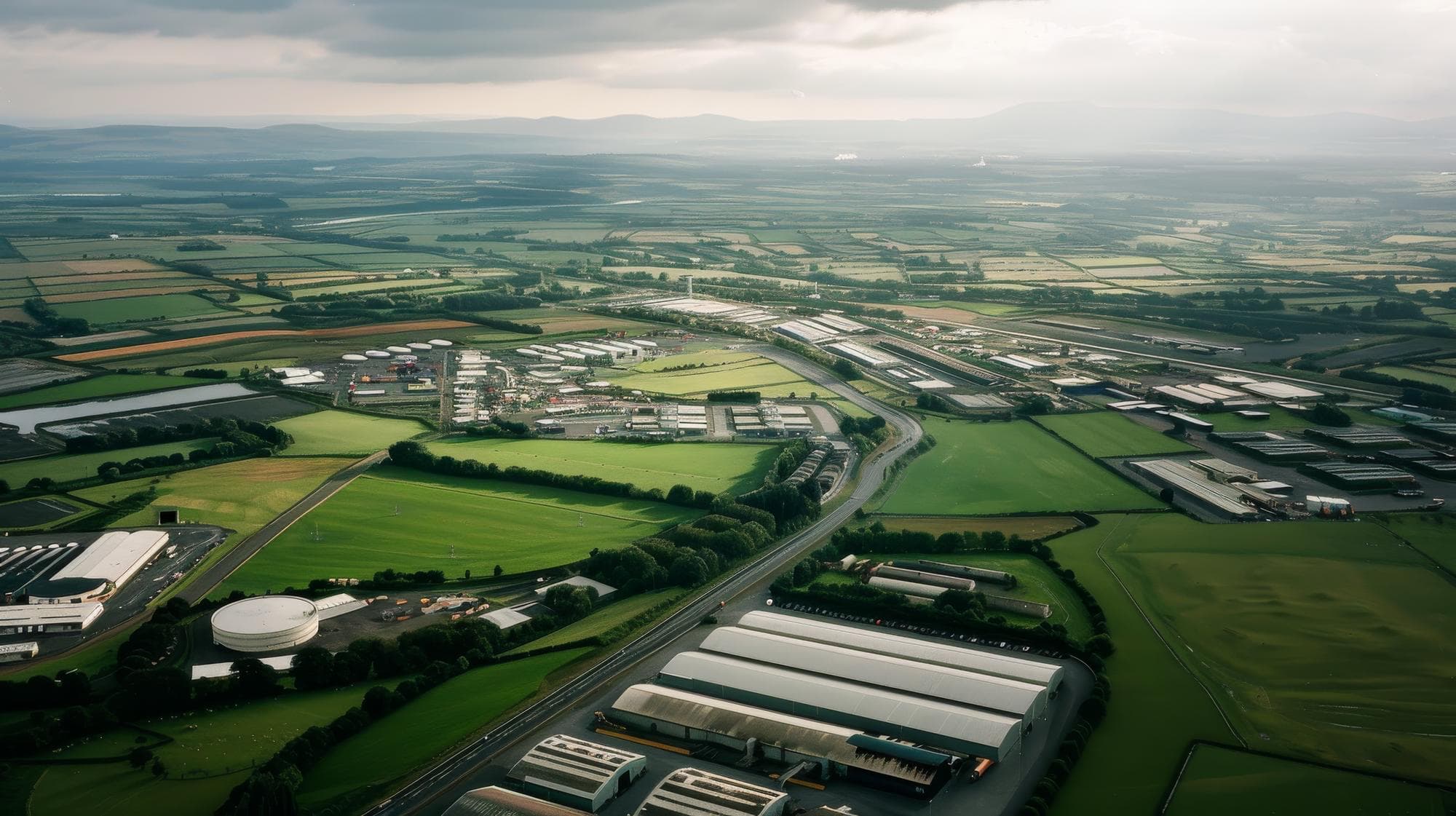
Bitdeer Technologies Group recently paid approximately $100 million in cash to acquire about 200 acres in Milam County, Texas, near its existing Rockdale operations. The property was historically associated with the former Alcoa industrial site, and the acquisition increases Bitdeer's owned or operated footprint in the area to approximately 255 acres.
At a simple transaction-price level, the deal equates to approximately $500,000 per acre. That number is notable, but it does not explain why the company was willing to make a nine-figure commitment to property adjacent to an operation it already controlled.
The more interesting real estate detail is ownership.
Bitdeer said outright ownership provides greater long-term certainty for development, eliminates lease-renewal risk and creates greater flexibility as the company evaluates AI and high-performance computing development alongside its existing operations.
That makes the acquisition a useful case study in a question that is becoming increasingly important across data center real estate: when does owning the land become strategically more valuable than continuing to lease it?
Leasing Can Work Until the Property Becomes Mission-Critical
Leasing land can be an efficient strategy during the early stages of a project. It can reduce the amount of capital required to control a site, provide flexibility and allow an operator to establish a presence without purchasing the underlying real estate.
The economics can change as the property becomes more important to long-term operations.
A data center campus can require substantial investment in buildings, electrical systems, cooling infrastructure, roads, security, fiber and other improvements. Once hundreds of millions or even billions of dollars of infrastructure are attached to a location, uncertainty surrounding control of the underlying property becomes much more consequential.
A lease that once provided flexibility can eventually create exposure. Renewal terms matter more. Expiration dates matter more. Restrictions on redevelopment matter more. The relationship between landlord and operator becomes increasingly important as the tenant invests additional capital into a property it does not own.
At that point, fee-simple ownership can become part of the infrastructure strategy.
$100 Million Can Be Viewed as the Price of Long-Term Control
The Bitdeer transaction is especially interesting because the company explicitly connected the acquisition to greater certainty over future development.
That framing shifts the analysis away from whether $500,000 per acre is expensive or inexpensive relative to nearby land. The more relevant question is what long-term control of the property is worth to the broader operation.
The newly acquired land is adjacent to Bitdeer's existing Rockdale facility. The company's Milam County sites currently have approximately 563 MW of interconnected capacity, with existing plans expected to increase that figure to 742 MW. The location also has a dedicated water supply, according to the company.
Those characteristics make the property part of a larger campus strategy rather than an isolated land investment. Ownership allows the operator to plan the combined site without the same renewal risk that accompanies leased acreage.
For a developer contemplating long-duration infrastructure investment, that certainty can have substantial strategic value.
Fee Simple Changes the Development Horizon
A lease and a fee-simple acquisition provide different levels of control.
Under a lease, the operator's rights ultimately depend on the contract. The agreement may provide decades of control, but terms surrounding renewal, assignment, improvements, redevelopment and future use still matter.
Fee-simple ownership removes many of those constraints. The owner can make long-term decisions about the property without negotiating around an eventual lease expiration.
This becomes particularly important for data centers because development horizons can extend for many years. A campus may be constructed in phases, with additional buildings or uses added as demand evolves.
A developer considering what the property could support in 2035 or 2040 may therefore evaluate ownership differently from an operator focused primarily on today's requirements.
The longer the investment horizon becomes, the more important permanent control of the real estate can become.
Adjacency Makes the Property More Valuable to One Buyer Than Another
The newly acquired acreage is also a useful example of how adjacency can influence real estate value.
Two identical 200-acre parcels in the same county do not necessarily have the same strategic value.
A parcel several miles away would require the developer to establish an entirely separate development position. A parcel immediately adjacent to an existing operation can potentially become part of the same long-term campus.
That can simplify site planning, create room for expansion, preserve operational flexibility and allow the developer to think about the properties as one larger asset.
This means the buyer-specific value of adjacent land can exceed what conventional comparable sales suggest.
The property is not simply 200 acres in Milam County. To Bitdeer, it is 200 acres connected strategically to a location where the company already operates and intends to expand.
Ownership Can Make Financing and Planning Easier
Bitdeer also said the acquisition allows it to plan and finance future AI and HPC development with greater certainty.
That is an important real estate consideration.
Large development projects require investors, lenders, customers and other stakeholders to evaluate whether the developer has sufficient control over the site to execute a long-term plan. A short or uncertain lease can introduce questions that would not exist under fee-simple ownership.
Owning the land does not guarantee that a project will be financed or built. Development still depends on numerous operational, commercial and infrastructure variables.
However, permanent site control can remove one category of uncertainty from the underwriting process.
For a developer seeking to invest heavily in a campus over many years, removing that uncertainty can justify paying a premium for ownership.
The Transaction Also Shows Why Price Per Acre Can Mislead
At approximately $500,000 per acre, the acquisition immediately invites comparison with other Texas land transactions.
That comparison has limitations.
Data center properties are highly site-specific. Acreage must be evaluated in relation to the existing operation, development potential, site configuration, access, infrastructure and other characteristics that influence how the land can be used.
The buyer's alternative also matters.
If Bitdeer had not purchased the property, what would continued leasing have cost over the long term? What renewal risk would remain? Could another owner eventually influence the company's ability to redevelop or expand? Would ownership make future financing easier?
Those questions are difficult to capture in a simple per-acre calculation.
The transaction price therefore represents more than the market value of 200 acres. It also reflects the strategic value of converting a long-term real estate dependency into direct ownership.
Former Industrial Land Continues to Attract Data Center Interest
The Rockdale location also reflects a broader pattern involving legacy industrial areas.
Large industrial sites can offer characteristics that are difficult to reproduce in conventional commercial developments, including substantial acreage, established access, industrial land-use history and infrastructure built to support large-scale operations.
The former Alcoa complex around Rockdale has evolved considerably since its aluminum-production era. Different portions of the broader property have attracted new uses, including computing infrastructure.
That transition demonstrates how the highest and best use of large industrial properties can change as the economy changes.
However, the lesson is not that every former manufacturing property should become a data center. Environmental conditions, physical suitability, land-use restrictions, access, infrastructure and development economics all need careful evaluation.
The opportunity exists when the property's industrial history creates characteristics that remain useful to a new generation of large-scale users.
Lease Risk Becomes More Important as the Campus Becomes More Valuable
One of the most interesting implications of the transaction is how risk changes over time.
Early in a property's life as a data center location, leasing may provide flexibility. As the operator invests more heavily in the campus, the cost of losing control can rise substantially.
Imagine an operator that develops specialized infrastructure on leased land and then reaches the end of the initial lease term. Even with renewal options, negotiations can become strategically important because relocating the operation may be difficult or uneconomic.
The landlord understands that.
So does the tenant.
Owning the property removes that future negotiation from the equation.
This does not mean data center operators should always buy rather than lease. Many successful facilities operate under long-term lease structures, and leasing can be appropriate depending on capital strategy, project duration and ownership objectives.
The key is recognizing when the real estate has become sufficiently important to the operating platform that permanent control carries additional value.
Buy Versus Lease Is Not Simply a Capital Decision
Commercial real estate discussions often frame buying versus leasing primarily as a financial comparison. What is the acquisition cost? What is the rent? What return could the capital generate elsewhere?
Data centers add strategic considerations.
The analysis can include the expected life of the facility, future expansion requirements, capital improvements, operational continuity, redevelopment rights and the consequences of losing control of the location.
A property expected to support a short-term requirement may not justify ownership.
A property expected to become the foundation of a multi-phase campus can present a very different calculation.
That is why the answer cannot be reduced to whether buying is cheaper than leasing.
The real question is how important long-term control of the property is to the broader development strategy.
What Landowners Should Take From the Transaction
The transaction also offers a lesson for owners leasing property to data center operators.
A tenant's interest in acquiring the property can increase as its investment in the site grows. That can create a potential disposition opportunity, but valuation should be approached carefully.
The tenant may place strategic value on ownership that another buyer would not.
At the same time, landowners should avoid assuming that every operating data center will eventually want to acquire its underlying property. Some operators deliberately prefer asset-light structures or long-term leases.
Understanding the tenant's development plans, remaining lease term and importance of the site can therefore be essential when evaluating a potential sale.
In specialized real estate, the highest-value buyer is often the party for whom the property solves the most important problem.
What This Means for Data Center Real Estate
The Rockdale transaction is not simply another large land purchase tied to AI development. It demonstrates how ownership structure can become part of the strategic value of a data center site.
Bitdeer already had operations in the area. What changed was the company's degree of control over the land supporting its future plans.
That distinction matters across the sector.
As data center campuses become larger and development horizons extend, developers will increasingly need to decide which properties they are comfortable leasing and which are important enough to own outright.
For some sites, leasing will remain the right answer.
For others, permanent control may be worth a significant acquisition premium.
Sometimes the Real Estate Strategy Is Simply Owning the Ground
A $100 million acquisition of 200 acres naturally attracts attention because of its scale. The more important story is what the transaction changes.
Fee-simple ownership gives Bitdeer permanent control over property adjacent to an existing operation, removes lease-renewal risk and provides greater flexibility as the company evaluates future development.
That makes the transaction a useful reminder that data center real estate strategy is not only about finding new sites.
Sometimes it is about securing the site an operator already depends on.
As campuses become larger, more expensive and more difficult to replicate, the distinction between occupying land and owning it can become increasingly important.
For long-term data center development, control itself can be one of the most valuable real estate assets.