Thursday, February 12, 2026
Why New AI Data Centers Are Being Designed for Sustained Load, Not Peak
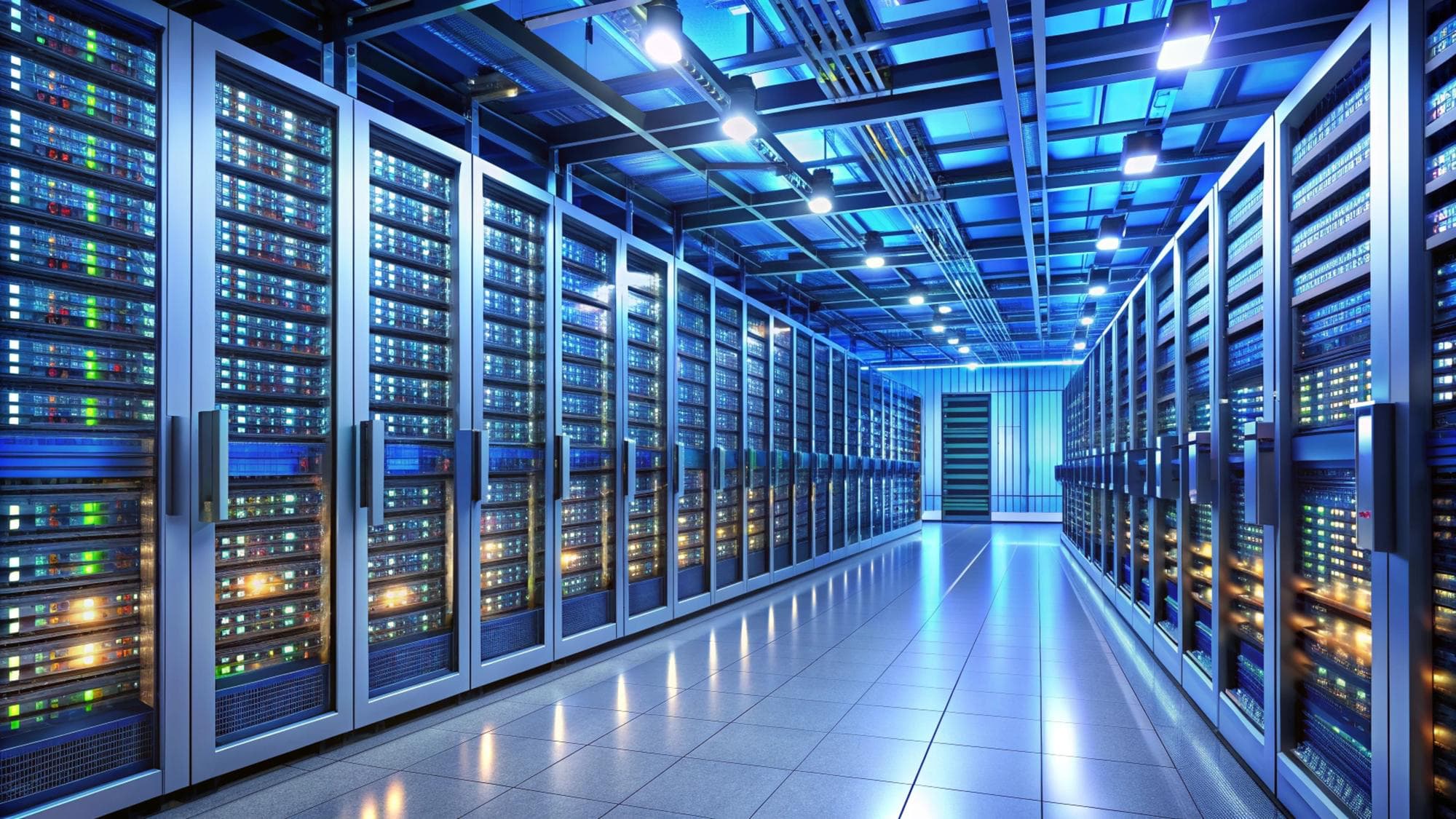
For decades, data center design was shaped by a simple assumption: peak load defined the system. Facilities were engineered to handle worst-case demand, with the understanding that average utilization would be significantly lower. This approach worked in an era dominated by enterprise workloads, virtualization, and burst-driven cloud applications.
AI has disrupted that model.
As AI training and inference workloads scale, sustained utilization—not short-lived spikes—has become the dominant operating condition. This shift is forcing a fundamental rethink of how data centers are designed, powered, and financed. In 2026, the most advanced AI-focused data centers are no longer optimized for rare peaks. They are engineered to operate near maximum load for extended periods without degradation.
For data center real estate, this design evolution carries significant implications. Sustained load changes how buildings are laid out, how campuses are planned, and how land and infrastructure are valued over time.
Peak-Based Design Reflected a Different Era of Demand
Peak-based design assumptions emerged from workloads that were inherently variable. Enterprise applications followed business hours. Virtualized environments consolidated diverse usage patterns. Cloud platforms emphasized elasticity and overprovisioning to absorb unpredictable spikes.
In that context, designing for peak made sense. Systems could remain underutilized most of the time, preserving redundancy and flexibility. Infrastructure inefficiencies were tolerated because they supported reliability.
AI workloads invert this logic. Training clusters run continuously for days or weeks. Inference pipelines operate as always-on services. Utilization remains high not because of inefficiency, but because compute demand is constant.
Designing for peak in this environment leads to chronic stress on systems not intended for continuous operation at maximum load.
Sustained Load Exposes Weaknesses in Legacy Infrastructure
Legacy data centers often struggle under sustained load conditions. Power distribution systems, cooling loops, and mechanical components were designed with downtime and variability in mind. When forced to operate continuously near capacity, failure rates increase and maintenance windows shrink.
This has direct real estate consequences. Buildings that once supported flexible workloads may no longer be viable for AI tenants without extensive retrofits. Floor layouts, ceiling heights, and mechanical room sizing become limiting factors.
As a result, sustained load considerations are increasingly driving site selection and building design from the outset. New facilities are being purpose-built to avoid the constraints embedded in older stock.
Power Systems Are Being Engineered for Continuity, Not Margin
Under sustained load models, power systems must deliver stability rather than excess margin. Traditional redundancy schemes assumed that load would fluctuate, allowing components to rest or cycle. AI workloads remove that buffer.
New AI data centers emphasize robust, continuously rated electrical components. Transformers, switchgear, and busways are selected for long-duration performance rather than intermittent peaks. Backup systems are designed to assume immediate and sustained engagement, not brief emergency use.
This changes how power infrastructure is sized and valued. Instead of optimizing for theoretical maximums, developers are prioritizing systems that can operate efficiently at high utilization for years.
For DCRE planning, this reinforces the importance of power quality and long-term grid alignment.
Cooling Design Has Shifted From Flexibility to Endurance
Cooling systems reveal the sustained load shift most clearly. Peak-based cooling strategies relied on ramping capacity up and down in response to demand. Under sustained AI load, cooling systems operate at or near full output continuously.
This has driven adoption of designs focused on endurance: larger heat exchangers, redundant cooling loops, and architectures that minimize thermal cycling. Liquid cooling, once experimental, is increasingly integrated as a primary strategy rather than a supplement.
These choices influence building footprints, mechanical yard sizing, and water planning. Sustained cooling demand ties the physical form of the data center more tightly to site-specific constraints.
Sustained Load Alters Campus Planning Logic
At the campus level, sustained load changes how capacity is phased. Traditional campuses assumed staggered utilization, allowing infrastructure to be built ahead of demand. AI campuses often experience immediate, intense utilization as soon as capacity comes online.
This compresses ramp-up periods and increases early-stage infrastructure stress. Roads, substations, cooling plants, and water systems must all be fully operational from day one, not gradually activated.
For real estate developers, this reduces tolerance for incomplete infrastructure or speculative phasing. Campus planning increasingly resembles utility-scale infrastructure development rather than conventional commercial real estate.
Financial Models Are Being Rewritten
Sustained load also reshapes financial assumptions. Revenue models based on variable utilization and gradual ramp-up are less applicable. AI tenants commit to large, continuous capacity blocks with high power draw from the outset.
This can improve revenue predictability but increases capital intensity. Infrastructure must be fully deployed upfront, leaving less room for incremental investment.
Investors and lenders are adjusting underwriting criteria accordingly. Sustained load facilities are evaluated based on durability, not flexibility. Design decisions that support long-term operational stability are rewarded, even if they increase initial costs.
Design Choices Are Becoming Market Differentiators
As sustained load becomes the norm for AI workloads, design sophistication is emerging as a competitive differentiator. Markets capable of supporting these designs—through power availability, water access, and regulatory support—gain advantage.
Facilities unable to support sustained load will increasingly be bypassed for AI deployment, regardless of location or historical relevance. This creates a bifurcation in the data center real estate market between assets designed for endurance and those optimized for variability.
What Sustained Load Signals for the Next Development Cycle
The move away from peak-based design reflects a deeper shift in how digital infrastructure is used. AI workloads demand continuity, not elasticity. They reward systems built to endure, not merely to flex.
For data center real estate, this means future value will be determined by how well assets support sustained performance over time. Buildings, campuses, and markets that align with this reality will attract the next wave of investment. Those that do not will find themselves increasingly peripheral.
Sustained load is not a design preference. It is the new operating baseline.